Recent criticism of Qatar’s human rights record has mainly cited a figure published in a controversial Guardian report in February 2021 that was criticised for its misleading headline.
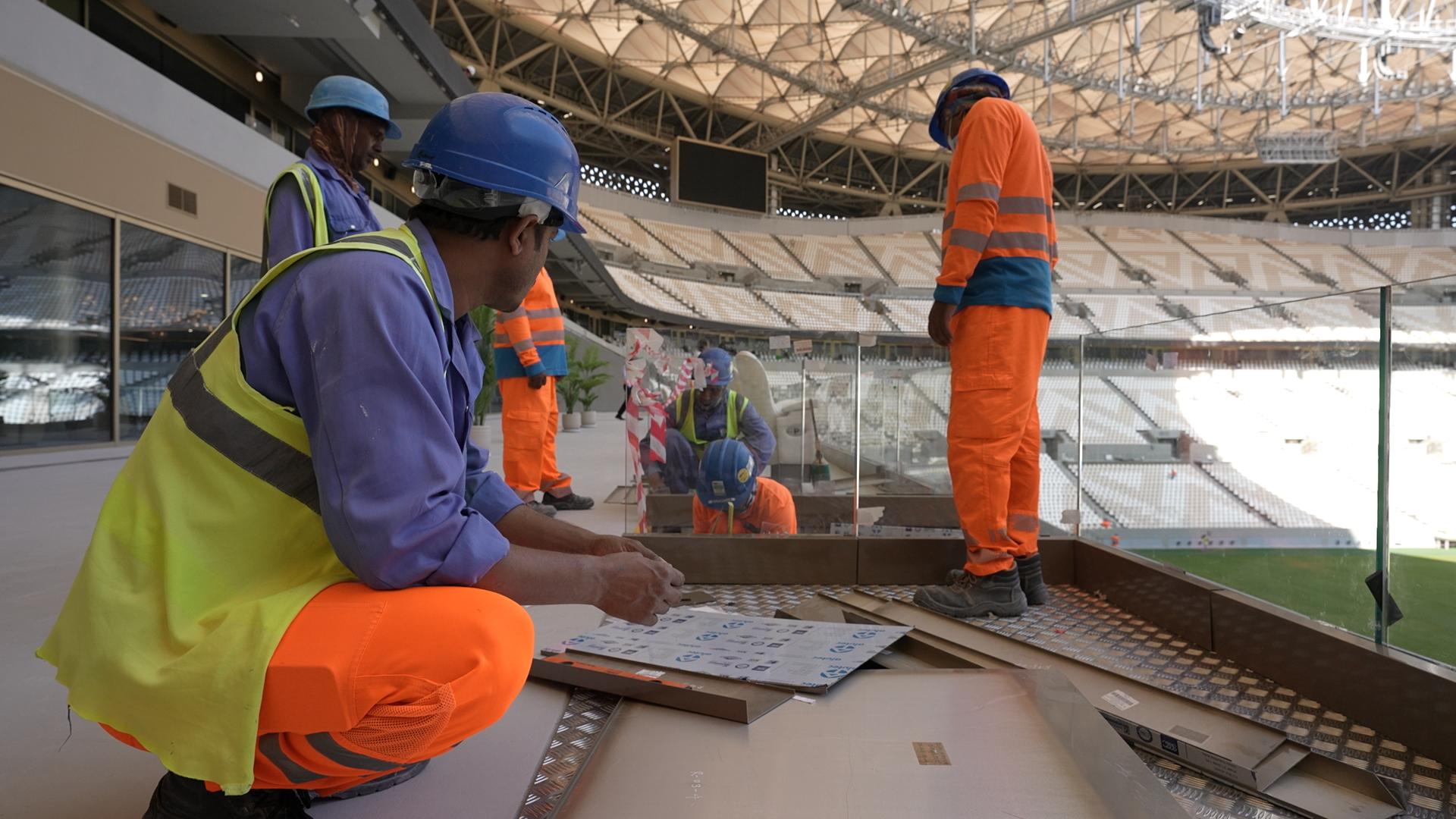
The High Court in Bangladesh requested a list of Bangladeshi migrant workers on Monday who lost their lives or suffered injuries while working in Qatar between 2010 and 2022 as part of the preparations for the FIFA World Cup.
In response to a writ petition, the court requested that a list of the names of Bangladeshi migrant workers employed in Qatari construction projects be compiled by the foreign ministry, expatriates welfare, and overseas employment ministry, local reports said.
The order was issued by the High Court’s bench of Justices Farah Mahbub and Ahmed Sohel in response to a public interest lawsuit that was brought by a Bangladeshi attorney in December, according to reports.
The Bangladeshi court also issued a ruling requesting that the authorities justify why they should not be instructed to provide compensation to the families of Bangladeshi migrant workers within four weeks, according to The Daily Star.
Supreme Court lawyer Masood Reza Sobhan, who submitted his petition on 13 December, informed the court that between 2010 and 2022, 450 Bangladeshi migrant workers and numerous others were hurt during construction activities in Qatar as part of the World Cup preparations, citing international media and human rights organisations like Amnesty International.
According to Sobhan, he attached reports from the BBC and CNN about migrant workers’ fatalities and injuries in Qatar between 2010 and 2022 to the writ suit.
“The order will now be sent to the Bangladesh mission in Qatar and the Bangladesh consulate in Geneva so that they can start talks with the Qatari government and FIFA, the partners-in-crime, about compensation for these dead or injured victims,” he told EFE, according to reports.
However, Qatar’s Labour Minister Ali bin Samikh Al Marri said in November the country has already paid out hundreds of millions of dollars in unpaid wages.
Al Marri’s comments were the first such official government remarks to respond to the #PayUpFIFA campaign, a collective appeal by human rights groups for FIFA to match the tournament’s $440 million in prize money with compensation for migrant workers who have experienced human rights violations during the tournament’s preparations.
The Workers’ Support and Insurance Fund, established by Qatar in 2018 to benefit unpaid workers, has given out $320 million by November last year, according to the Qatari minister.
“If there is a person entitled to compensation who has not received it, they should come forward and we will help them,” he said, adding that Qatar was prepared to examine cases from more than a decade ago.
“Every death is a tragedy,” Al Marri said, adding: “There is no criteria to establish these funds.
In the lead up to the World Cup, Qatar faced heavy scrutiny on its human rights record, with particular focus on migrant workers in the Gulf state.
However, Doha has repeatedly stressed that it has responded to criticism by introducing major reforms over the years, most notably the dismantling of the controversial kafala, or sponsorship, system.
Scrutiny continued even throughout the sports tournament, with officials in Qatar and beyond saying the “unprecedented attack” by western media has largely disregarded key labour reforms in the country.
Rights group doubled down on pressure in the lead up to the World Cup with calls to compensate migrant workers and their families.
With just 100 days prior to kick-off, Human Rights Watch demanded a “comprehensive remedy programme for workers who suffered serious harms, including deaths, injuries, and wage theft,” while working on World Cup-related facilities like as stadiums, transportation, and hotels.
‘Misleading’
Recent criticism of Qatar’s human rights record has mainly cited a figure published in a controversial Guardian report in February 2021 that was criticised for its misleading headline.
The report blamed deaths among Qatar’s South Asian community on the country’s preparations for the World Cup tournament.
The British publication’s article, headlined, “Revealed: 6,500 migrant workers have died in Qatar as it gears up for World Cup” links the “shocking” death rate to the start of the 2022 FIFA World Cup journey more than a decade ago, failing to provide a clarification of the reasons behind the deaths.
Failing to cite official medical records to explain the circumstances of the deaths, the Guardian persisted to quote a labour rights expert in the Gulf who claimed it is “likely” that many workers who died were employed on these World Cup infrastructure projects.
The article reads that an average of 12 migrant workers from the south Asian nations have died each week since December of 2010. Statistics obtained from the embassies do not include just migrant workers, but rather the total number of all deaths of nationals of India, Pakistan, Bangladesh, Nepal and Sri Lanka, across all occupations.
These figures include those who passed away due to natural causes, chronic illness or even traffic accidents.
Qatari authorities have continually slammed this as baseless.
In response to The Guardian’s article at the time, the Government Communications Office issued a statement confirming the wellbeing of everyone in Qatar is of the utmost importance to authorities.
“Millions more have lived in Qatar during the last 10 years and returned home. All have contributed to Qatar’s economy and sent home remittances that support their families and home nation,” the GCO said.
“Unfortunately, of the millions of residents from India, Sri Lanka, Bangladesh, and Nepal who have lived in Qatar from 2011 to 2019, a very small percentage have sadly passed away. Although each loss of life is upsetting, the mortality rate among these communities is within the expected range for the size and demographics of the population.
Speaking to Doha News at the time, experts said the “deceptive” reporting is part of major western media propaganda against the first Arab and Muslim host of a World Cup tournament.