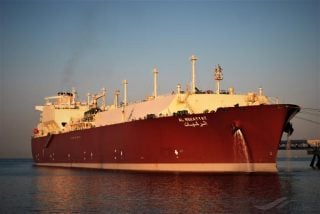
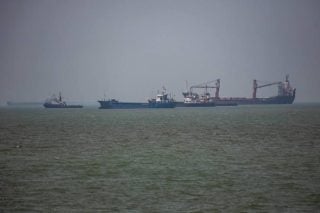
The Strait of Hormuz reopens to commercial shipping as a Lebanon ceasefire takes effect, though U.S. naval pressure remains in place.
The Strait of Hormuz has been declared fully open to commercial vessels, as a ceasefire in Lebanon comes into effect, according to Iran’s Foreign Minister Abbas Araghchi.
Transit will take place along a coordinated route already announced by Iran’s Ports and Maritime Organisation, Araghchi announced in a post on X on Friday.
“In line with the ceasefire in Lebanon, the passage for all commercial vessels through the Strait of Hormuz is declared completely open for the remaining period of the ceasefire, on the coordinated route as already announced by the Ports and Maritime Organisation of the Islamic Republic of Iran,” Araghchi wrote.
U.S. President Donald Trump acknowledged the announcement in a post on Truth Social, repeating that the strait was fully open. “THANK YOU!” he added.
He has also said the Strait of Hormuz is “completely open and ready for business”, though Washington’s naval blockade will remain in place until a deal with Iran is reached.
Trump added that the process “should go very quickly” as most points have been negotiated.
The reopening comes after Trump announced on Thursday that Israel and Lebanon had agreed to a 10-day ceasefire.
“The truce will take effect at 5pm US East Coast time (21:00 GMT) on Thursday,” Trump wrote after speaking to Israeli Prime Minister Benjamin Netanyahu and Lebanese President Joseph Aoun. He added that he plans to host both leaders at the White House for talks.
Since 2 March, Israel has carried out expanded airstrikes across Lebanon, killing at least 2,124 people and displacing more than 1.1 million others.
Tens of thousands of displaced Lebanese have begun returning home following Israel’s invasion, though the Lebanese army has warned of “a number of violations” and urged residents to exercise caution.
The U.S. had earlier announced plans to begin a naval blockade of the Strait of Hormuz after Iran effectively closed the vital oil shipping route for weeks in response to the U.S.-Israeli attack on Iran in February.
Iran’s deputy foreign minister Saeed Khatibzadeh said on Friday that Tehran would not accept any temporary ceasefire and would only agree to a permanent end to conflicts across the region.
Iran has also told intermediaries that Lebanon must be included in any ceasefire agreement with the United States and Israel.