Qatar has consistently emphasised the Palestinian issue and Israel’s aggression as a central Arab concern at various forums including the UNGA.
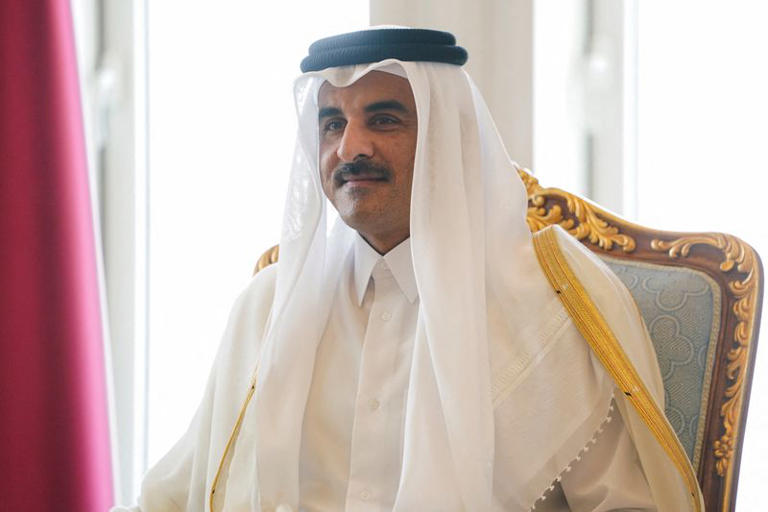
Qatar’s Amir Sheikh Tamim bin Hamad Al Thani left Doha on Sunday for New York to attend the 80th United Nations’ General Assembly (UNGA), where he will speak at the opening session on September 23, two weeks after Israeli strikes on Doha.
This year’s UNGA, convened under the theme “Better Together: 80 Years and More for Peace, Development and Human Rights,” comes amid heightened regional tensions following the Israeli strike on Doha on 9 September, which targeted a residential building housing members of Hamas’s political office.
The attack killed six people, including a Qatari officer, 22-year-old Corporal Bader Al-Humaidi Al-Dosari of Qatar’s Internal Security Force (Lekhwiya).
Following the attack, the United Nations Security Council convened an emergency session a week later and issued a statement, agreed upon by all 15 members including the United States, expressing “condemnation of the recent strikes in Doha, the territory of a key mediator.”
“The members of the Security Council expressed their condemnation of the recent strikes in Doha, the territory of a key mediator, on 9 September,” said the statement, drafted by France and the United Kingdom, which nonetheless stopped short of explicitly mentioning Israel.
A week later, Sheikh Tamim addressed the Emergency Arab-Islamic Summit in Doha, reiterating the gravity of the attack, condemning the strike as “blatant, treacherous, and cowardly” and emphasising the need to uphold Qatar’s sovereignty and protect civilians.
“This aggression is in reality blatant, treacherous and cowardly. It is impossible to deal with such a degree of malice and treachery,” the Amir said, calling on regional and international actors to uphold peace and prevent further escalations.
Sheikh Tamim also warned that Israeli Prime Minister Benjamin Netanyahu’s expansionist vision of turning the Arab world into “an Israeli sphere of influence” was a “dangerous illusion”, and vowed that Qatar would do “whatever is necessary to preserve our sovereignty and confront Israeli aggression”.
Qatar has consistently emphasised the Palestinian issue and Israel’s aggression as a central Arab concern at various forums including the UNGA.
During last year’s UNGA 79 session, Sheikh Tamim described the Gaza war as “the most barbaric, heinous and extensive breach of human values, international charters and norms,” and stressed that the Palestinian cause “cannot be marginalised, because it is an issue of indigenous people on their own land who are subjected to a settler-colonial occupation.”
The Amir highlighted Qatar’s role in mediation and humanitarian work as “a moral duty before political decisions, and we act without expecting anything in return.”
Analysts note that Qatar’s active diplomacy and regular participation at the UNGA reinforce its position as a reliable mediator in regional conflicts.
Nassir bin Abdulaziz Al-Nasser, President of the 66th UNGA session, praised Sheikh Tamim’s addresses, stating they “embody Qatar’s enduring commitment to peace, international cooperation, and support for the Palestinian cause while calling for de-escalation and adherence to international law.”
Throughout his speeches, Amir has consistently called for halting ongoing Israel’s violations against Palestinians, ending the siege on Gaza, and supporting the establishment of an independent Palestinian state with East Jerusalem as its capital. He has condemned attempts to impose a fait accompli and urged the international community to take urgent action to stop the Israel’s bloodshed of Palestinians.
The 80th UNGA session will bring together leaders, diplomats, and policymakers from over 190 countries to discuss pressing global challenges, including Israel’s war on Gaza, escalating geopolitical conflicts, the Russia-Ukraine crisis, and worsening humanitarian conditions.
The session’s highlight, the General Debate, will be held from 23 to 29 September, offering Qatar’s Amir Sheikh Tamim a platform to reaffirm Qatar’s positions on regional security, humanitarian intervention, and international cooperation and possibly