The Gulf state also emphasised that Israel must ensure the protection of property belonging to the UN and other international organisations, including schools, medical facilities, transportation networks, and water infrastructure.
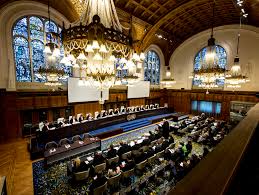
Qatar has submitted a formal memorandum to the International Court of Justice (ICJ), stressing Israel’s duty to permit the operation of the United Nations and other international organisations within Israel and the occupied Palestinian territories.
In a statement released on Friday, Qatar’s Foreign Ministry confirmed that the memorandum was submitted in response to a December 2024 resolution by the UN General Assembly, titled “Request for an Advisory Opinion from the International Court of Justice on Israel’s Obligations Regarding the Presence of United Nations Activities, International Organisations, and Third States.”
This memorandum, submitted by Qatar’s Ambassador to the Netherlands Mutlaq Al-Qahtani as part of a request for an advisory opinion, stresses that Israel must “commit to allowing the UN and other international organisations, particularly the UN Relief and Works Agency for Palestine Refugees in the Near East (UNRWA) and other humanitarian organisations, to operate in Israel and the occupied Palestinian territories”.
The Gulf state also emphasised that Israel must ensure the protection of property belonging to the UN and other international organisations, including schools, medical facilities, transportation networks, and water infrastructure.
It also urged that Israel must respect the international organisation’s staff and employees, especially those working in the humanitarian and medical fields.
Israel’s brutal genocide on Gaza has killed some 359 aid workers, including 258 UN staff, according to a report by the United Nations Office for the Coordination of Humanitarian Affairs.
In January, two new Israeli Knesset legislations, passed in October, came into effect. These laws aim to prevent Israel from engaging with UNRWA and ban the agency from operating in Gaza, East Jerusalem, and the West Bank.
The UNRWA was established in 1949 as a subsidiary organ of the UN General Assembly, one year after the establishment of Israel, which was preceded by the mass forced displacement of Palestinians, known as the Nakba.
For over 70 years, the agency has been the primary provider of aid to Palestinian refugees in the occupied West Bank, Gaza Strip, East Jerusalem, and neighbouring countries such as Lebanon, Syria, and Jordan.
It is the only UN agency dedicated to a specific group of refugees in certain areas.
In its statement, Qatar emphasised the urgent need to repeal and halt the enforcement of the Knesset’s legislations, stressing the importance of “allowing and facilitating relief programs and the distribution of life-saving aid in the occupied Palestinian territories, particularly food, clothing, and medical supplies, and ensuring the unimpeded work of the UN and other international humanitarian organisations.”
Qatar expressed confidence that the ICJ’s advisory opinion would “clarify these critical legal issues, safeguarding the livelihoods of the Palestinian people and their inalienable right to self-determination”.
Gaza ceasefire truce talks resume: Egypt
Delegations from Israel and Qatar arrived in Cairo on Thursday to resume the second phase of the ceasefire talks in Gaza between the Palestinian group Hamas and Israel.
The first phase of the three-tiered agreement is set to expire on Saturday, with U.S. representatives also present in Egypt, as confirmed by Egypt’s state information service.
Phase two calls for a complete end to Israel’s genocide of the besieged Gaza enclave, along with the return of all remaining living captives in Gaza and Israel’s full withdrawal from Gaza.
Mediators Qatar and Egypt are also reportedly in discussions to streamline the delivery of humanitarian aid into Gaza.
Hamas has confirmed its willingness to engage in talks for the second phase of the ceasefire, stating that adherence to the terms of the deal is “the only way to release the occupation’s captives” held in Gaza.
“Any attempts by [Israeli Prime Minister] Benjamin Netanyahu and his government to backtrack on the agreement and obstruct it will only lead to more suffering for the captives and their families,” it added.
As of now, there are 59 captives remaining in Gaza, 24 of whom Israel believes are alive.
In the most recent prisoner exchange, Hamas handed over the bodies of four captives on Thursday in return for the release of over 600 Palestinian prisoners. However, Israel delayed the handover of some of these prisoners, citing the group’s publicised release ceremonies as a “violation” and delays in “verifying the bodies” of the four deceased Israeli men.
Israel has confirmed receiving the bodies of Shlomo Mansour, Ohad Yahalomi, Tsachi Idan, and Itzik Elgarat.
The first phase of the Gaza truce, brokered by Qatar, Egypt, and the U.S., announced on January 15, came into effect on January 19.
Israel has killed some 61,700 Palestinians during its 16-month genocidal war on the Gaza Strip according to government officials. This figure includes thousands previously reported as missing in the rubble, as reclassified by authorities.
However, the number is expected to be much higher, with tens of thousands still missing or buried under the rubble.