Qatar has condemned Israel’s latest wave of air strikes across Lebanon, warning that the escalation risks further destabilising the region.
In a statement on Wednesday, the Ministry of Foreign Affairs said Qatar “condemns the brutal series of Israeli airstrikes that targeted vast areas in Lebanon,” describing them as a “dangerous escalation” and a violation of Lebanese sovereignty, international humanitarian law, and United Nations Security Council Resolution 1701.
Israel carried out more than 100 strike within minutes. Israeli Defence Minister Israel Katz said the strikes targeted Hezbollah infrastructure, describing them as “the largest concentrated blow Hezbollah has suffered” since the 2024 “Pagers” operation.
Lebanon’s Civil Defence said that at least 254 people were killed and 1,165 others wounded in Wednesday’s attacks, as emergency teams continued search and rescue operations.
Strikes hit densely populated areas, including parts of Beirut, causing panic as explosions and sirens were heard in the city. Authorities urged residents to keep roads clear to allow emergency services to respond, as hospitals reported a surge in critical injuries.
Lebanese Prime Minister Nawaf Salam said the attacks showed “no regard for regional and international efforts to end the war,” and violated international law.
Calls for accountability
Qatar called on the international community to act, urging it to “compel the Israeli occupation authorities to halt their barbaric massacres and repeated attacks on Lebanon,” and ensure accountability under international law.
The ministry also reaffirmed Qatar’s “full solidarity with the Lebanese Republic,” stressing its support for Lebanon’s security, sovereignty, and territorial integrity.
Conflicting claims over ceasefire terms
The escalation comes despite a ceasefire announcement between the United States and Iran, with conflicting signals over its scope and whether it extends to Lebanon.
Earlier, Pakistan, which helped mediate the agreement, said Lebanon was included in a broader 10-point plan presented to both Washington and Tehran.
U.S. President Donald Trump said Lebanon was not included, describing the Israeli offensive against Hezbollah as a “separate skirmish,” while White House Press Secretary Karoline Leavitt said the truce does not extend to Lebanon.
Israeli Prime Minister Benjamin Netanyahu also indicated that the truce does not apply to Lebanon, as operations there continue.
Iran’s Fars News Agency, citing sources linked to the Islamic Revolutionary Guard Corps, reported that the ceasefire was intended to apply across the region, warning that continued Israeli attacks on Lebanon could undermine the agreement and trigger further escalation.
Wider regional impact
The escalation is already affecting critical global trade routes.
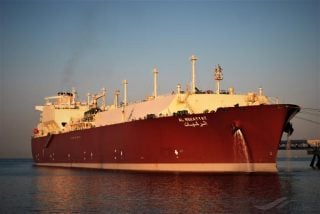
Oil tanker traffic through the Strait of Hormuz has reportedly been suspended following the strikes, according to Iran’s Fars News Agency, highlighting the immediate effects on energy and maritime security.
The report said two tankers had passed through the waterway earlier with permission from Iranian authorities after initial ceasefire signals, before the situation deteriorated again.
The Strait of Hormuz remains one of the world’s most important energy corridors, handling a significant share of global oil and LNG shipments, and any disruption raises concerns about supply chains and market stability.
Since early March, more than 1,500 people have been killed in Israeli strikes across Lebanon, according to Lebanese authorities, with Wednesday’s toll expected to rise further.
Qatar reiterated calls for de-escalation and renewed diplomatic efforts, warning that continued violence risks drawing the region into a broader crisis.