Exhibition gathers over three decades of experimentation, aiming to portray the seminal artist’s patience, layering, and versatility.
She is often introduced as a master of Sadu, but Khawla Mohammed Abdulaziz Al-Mannai has spent her career chasing new forms, new textures, new ways of seeing.
Her connection to the centuries-old weaving tradition of bold, geometric patterns is obvious, as she is not just an artist but an academic who has studied, taught and contributed to the form that has preserved its place in Qatar’s cultural history.
In her first exhibition in Qatar in long, however, she gathers that pursuit of versatility into one sweeping statement. It brings together decades of exploration that Al-Mannai has managed to garner.
Works exhibited in Progress and Procession, hence, span 34 years of artistry, evidently portraying the way Al-Mannai’s career has unfolded in cycles: one year devoted to a theory, another to a series, the next to realism.
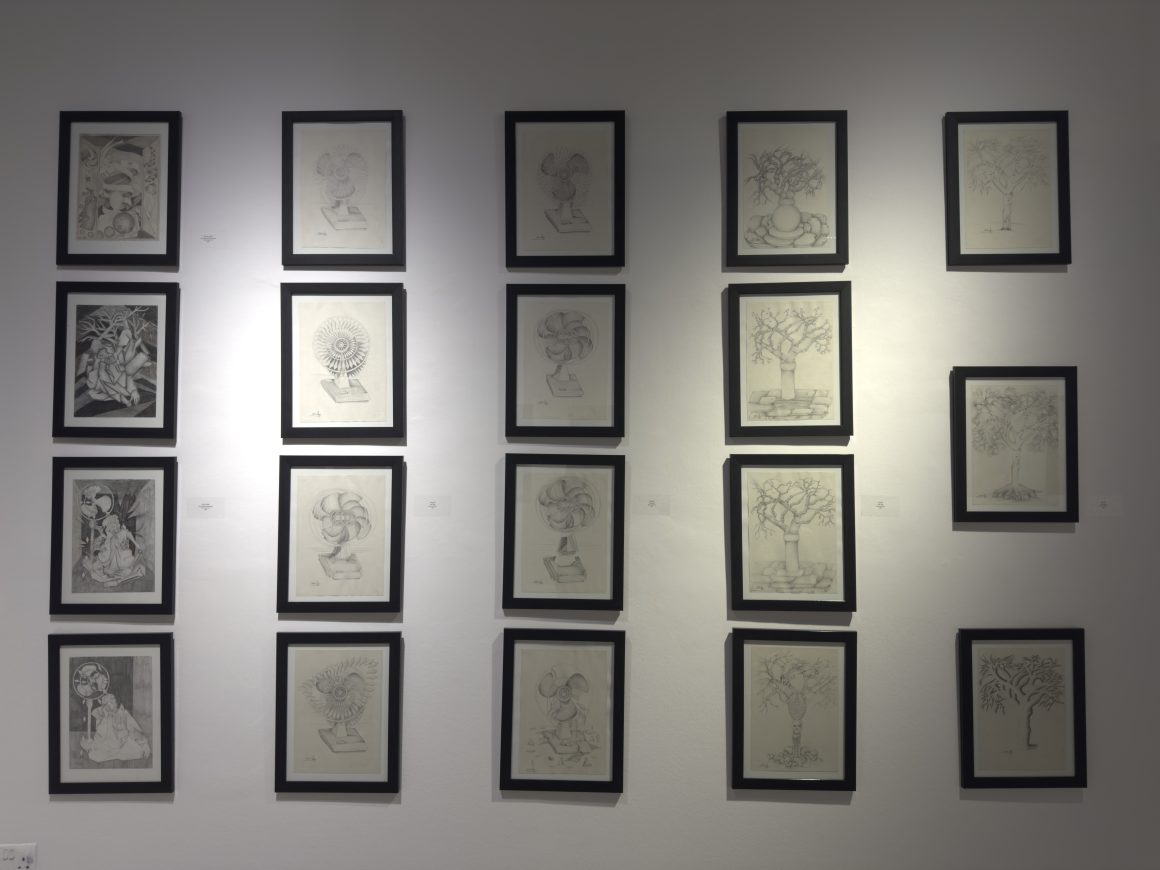
Paintings built from thousands of dots laid patiently with a pen, shadows that portray the abaya as it was once worn, abstractions and art forms inspired by travel, and canvases that study realism, surrealism, and the abstract side by side. Each work in the Progress and Procession exhibit is distinct and telling in its own right.
“This is history,” Al Mannai said, “My history.”
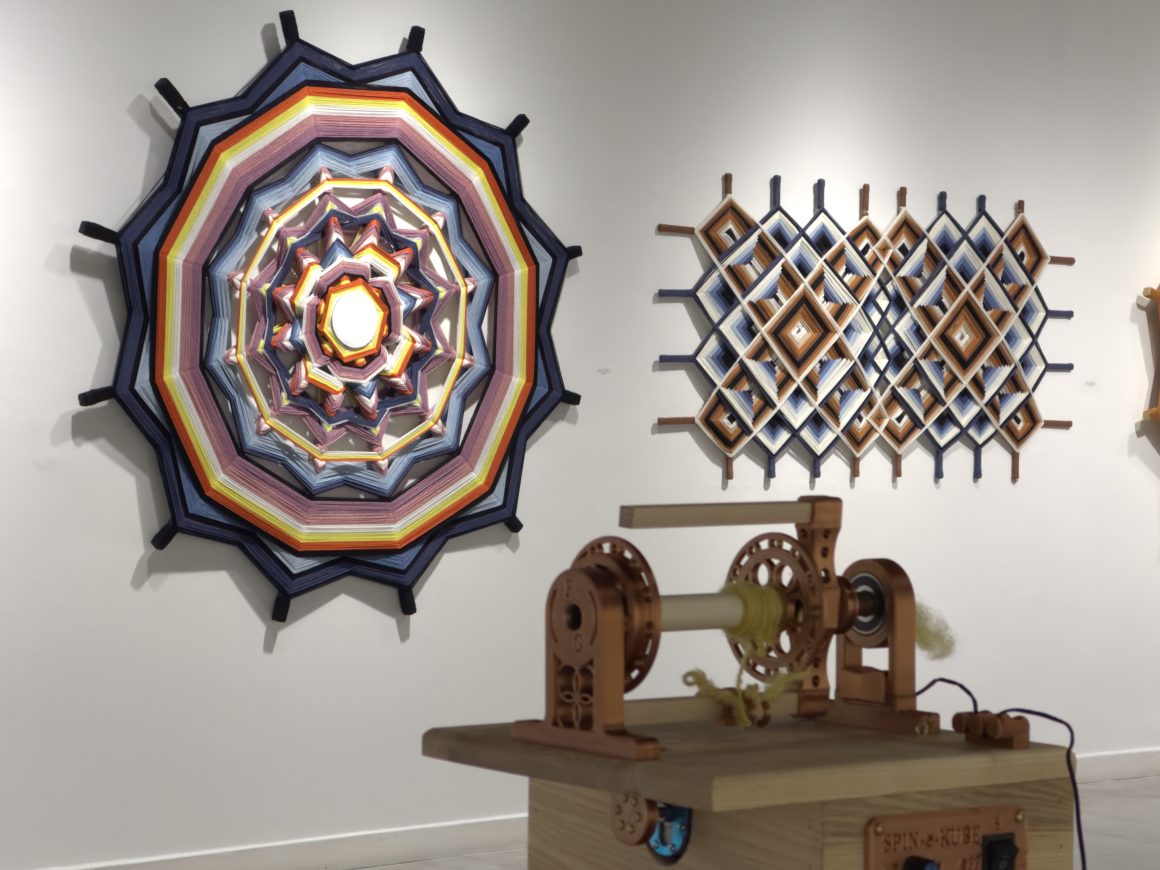
Versatility is not a departure from heritage but its continuation, she says, plotting it as a way of showing that tradition and progress are threads of the same weave.
“The idea in general was the thread of thinking,” she explained. “The way of thinking is like a connection of the threads. And so I used this idea to make these paintings.”
That thinking extends beyond style to subject. Many of her works speak directly to Qatari identity, particularly the women who embody cultural memory. One of them is a recollection of her mother’s sewing machine, a throwback from her childhood.
The other is a piece from 1990 — one of the oldest in the exhibit — of a woman in an Abaya, made with thousands of dots, yet layered to create shadow and depth that shift as you move closer. It stands at the beginning of the exhibition’s procession, perhaps a fitting reminder that three decades ago, Al-Mannai was already building bridges between heritage and experiment.
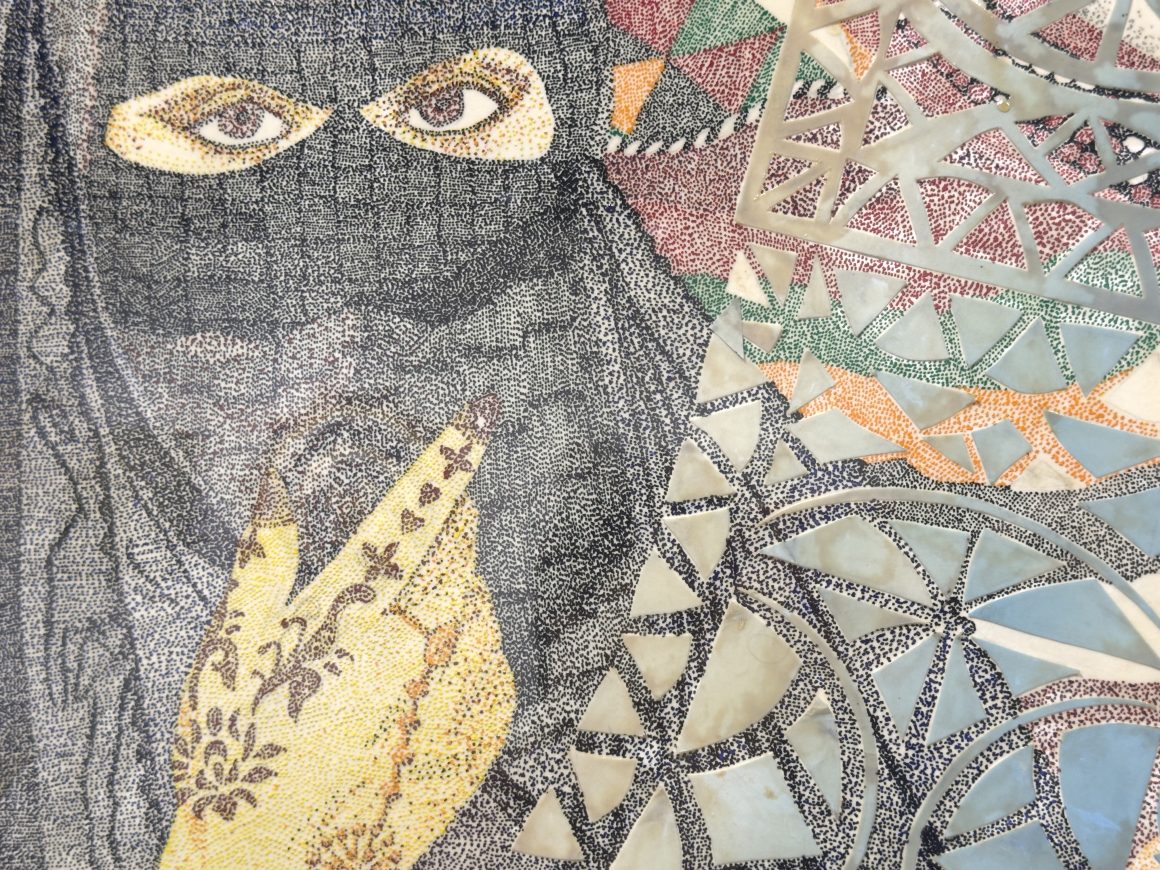
Yet, it is the patience that went into that work, as well as the quiet accumulation of marks, that feels like a metaphor for her art itself: an insistence that progress comes through steady layering, through time, through persistence. Her works, Al-Mannai says, can be reminders of lives, gestures, and histories that might otherwise fade.
Her works through the years have equally been shaped by where she has travelled. She worked with as few as three colours, creating a distinct style, yet enough to encapsulate a Turkish landscape’s rhythm.
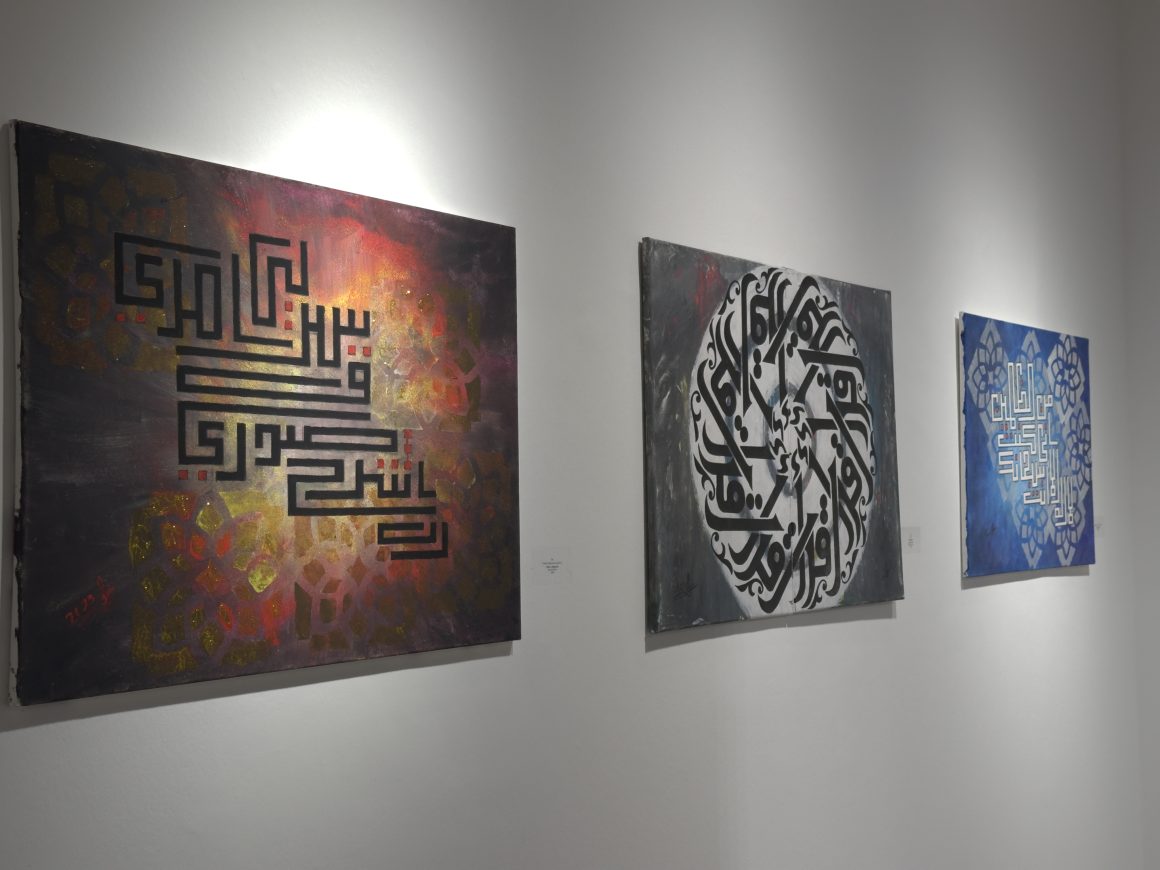
In Germany, far from mosques, she wrote out passages of the Qur’an, maintaining a connection to her faith through ink and rhythm. Inspiration, for Al-Mannai, is never separate from the environment. “I don’t stop it,” she says. “In Germany, you don’t have a mosque, so doing calligraphy was my way to connect to Allah.”
Here, too, absence served as a spark to create.
The result, however, is surprisingly coherent. It feels less like a single body of work than a procession of ideas, each given its moment, each moving toward the next. Al-Mannai is not interested in standing still. “Every year, I pick a theory,” she said. “Maybe in one year, all my pictures will be serials. After that, I may paint. A realistic one. Then abstracts.Then maybe weavings.”
For Al-Mannai, there is urgency in sharing this journey now. Too often, she says, artists are celebrated only after they are gone.
“I want to make a change. I don’t want to be remembered when I go. I want to be remembered while I’m here,” she says.
She wants her audience to see her, to recognise her range, while she can stand among them. Versatility, she implies, is not simply a quality of her art. It is her art.