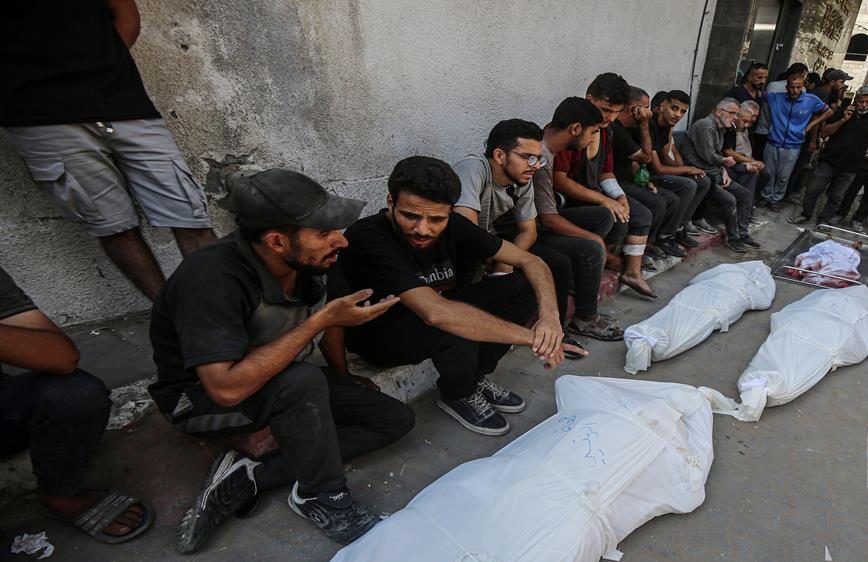
Gaza’s health ministry confirmed that rescuers recovered at least 250 bodies since the ceasefire came into effect, bringing up the death toll to 67,869.
Israel killed at least six Palestinians in the Gaza Strip on Tuesday despite the first phase of the ceasefire deal in effect, as two others succumbed to injuries from previous Israeli airstrikes on the territory.
Occupation forces carried out the deadly airstrike in the Shuja’iyya neighbourhood, east of Gaza City, as civilians were inspecting their homes in the area, according to Palestine’s news agency, Wafa.
Israeli occupation forces also shot dead Palestinian civilian, Khalid Barbakh, in Khan Younis in the southern Gaza Strip on Monday while he was inspecting his home.
The first phase of the Gaza ceasefire came into effect on October 10, nearly seven months after the collapse of the previous deal the mediators—Qatar, Egypt, and the United States—reached in January.
The ceasefire has enabled hundreds of thousands of internally displaced Palestinians to return to their homes while allowing local rescue teams to recover the bodies of thousands killed by Israel’s relentless attacks.
Gaza’s health ministry confirmed that rescuers recovered at least 250 bodies since the ceasefire came into effect, bringing up the death toll to 67,869. More than 10,000 others are believed to be under the rubble, according to Wafa.
Aid has also gradually started entering the blockaded territory for the first time since Israel blocked the entry of relief supplies on March 2. Israel caused famine in the Gaza Strip by blocking all forms of aid, leading to the death of 463 Palestinians as a result of severe malnutrition.
A limited number of aid trucks carrying vital supplies including gas and fuel entered Gaza on Sunday evening through the Karem Abu Salem crossing.
The United Nations and the International Committee of the Red Cross (ICRC) have called for the opening of all crossings into Gaza on Tuesday to enable the entry of vital aid.
“That’s what humanitarians, including ICRC, have been calling for in the last hours is making sure that, because of the huge needs, all entry points can be open,” Christian Cardon, Red Cross spokesman, told reporters in Geneva.