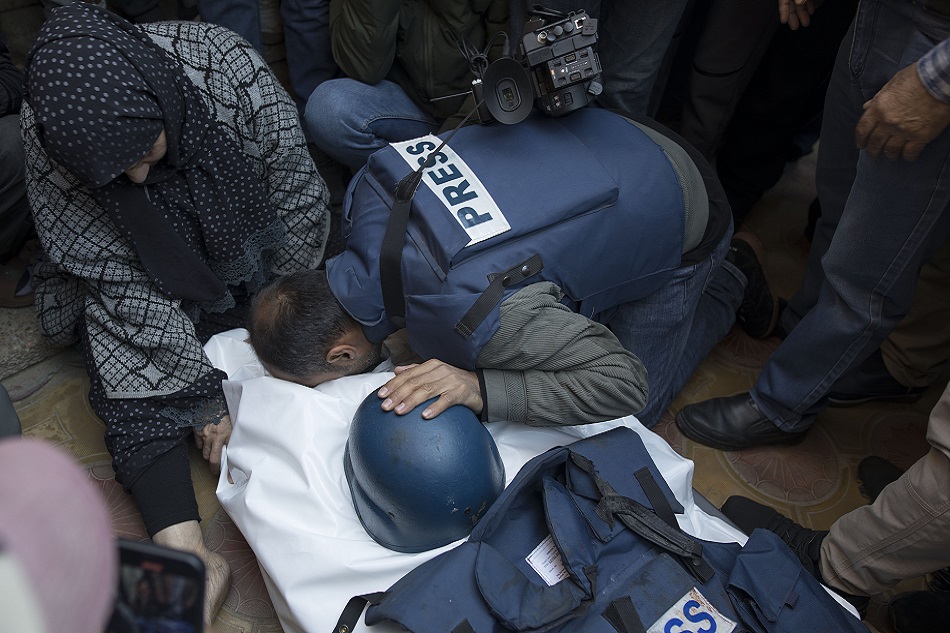
Starving and under constant threat, Gaza’s journalists risk their lives to report Israel’s destruction and killings, even as colleagues like Anas Al-Sharif are assassinated.
“Oh people, Anas is [killed], Anas is martyred, Israel killed Anas.”
The cry rang out from under the rubble of Al Shifa Hospital’s press tent on Sunday night. It wasn’t just grief; it was an echo carried through the shattered streets of Gaza. Another journalist announcing the death of yet another journalist. This time, Israel had killed five.
“It isn’t just the loss of colleagues, it’s the loss of friends, voices, and witnesses to what’s happening here,” Al Jazeera English reporter Ibrahim Alkhalili told Doha News from Gaza City.
The assassination of Anas Al-Sharif and four of his Al Jazeera colleagues has left reporters in Gaza broken. Exhausted and malnourished, they live with the unshakable fear of being next.
Journalists have become prime targets in Israel’s war on Gaza. Since 7 October 2023, Israeli forces have killed more than 270 journalists and media workers. Each one silenced is not just a reporter, but a witness, erased to blind the world to a genocide.
“People here see journalists as [dead men] walking on the ground,” Ibrahim says. Every day alive is borrowed time, even when the bombs miss, hunger stalks them.
“I can’t focus sometimes while filming,” he admits. Two weeks ago, he survived on a single meal a day. The brief trickle of commercial trucks last week brought food that few could afford. Now, he manages two meagre meals, an improvement measured not in fullness, but in survival.
“I’ve lost 10 kilos. I wake to bombardment and the sound of drones over my tent,” he says, adding that it was a constant reminder he is being watched. “Press tents are dangerous; they are targets,” he warns.
‘Five months pregnant, weighing only 45kg
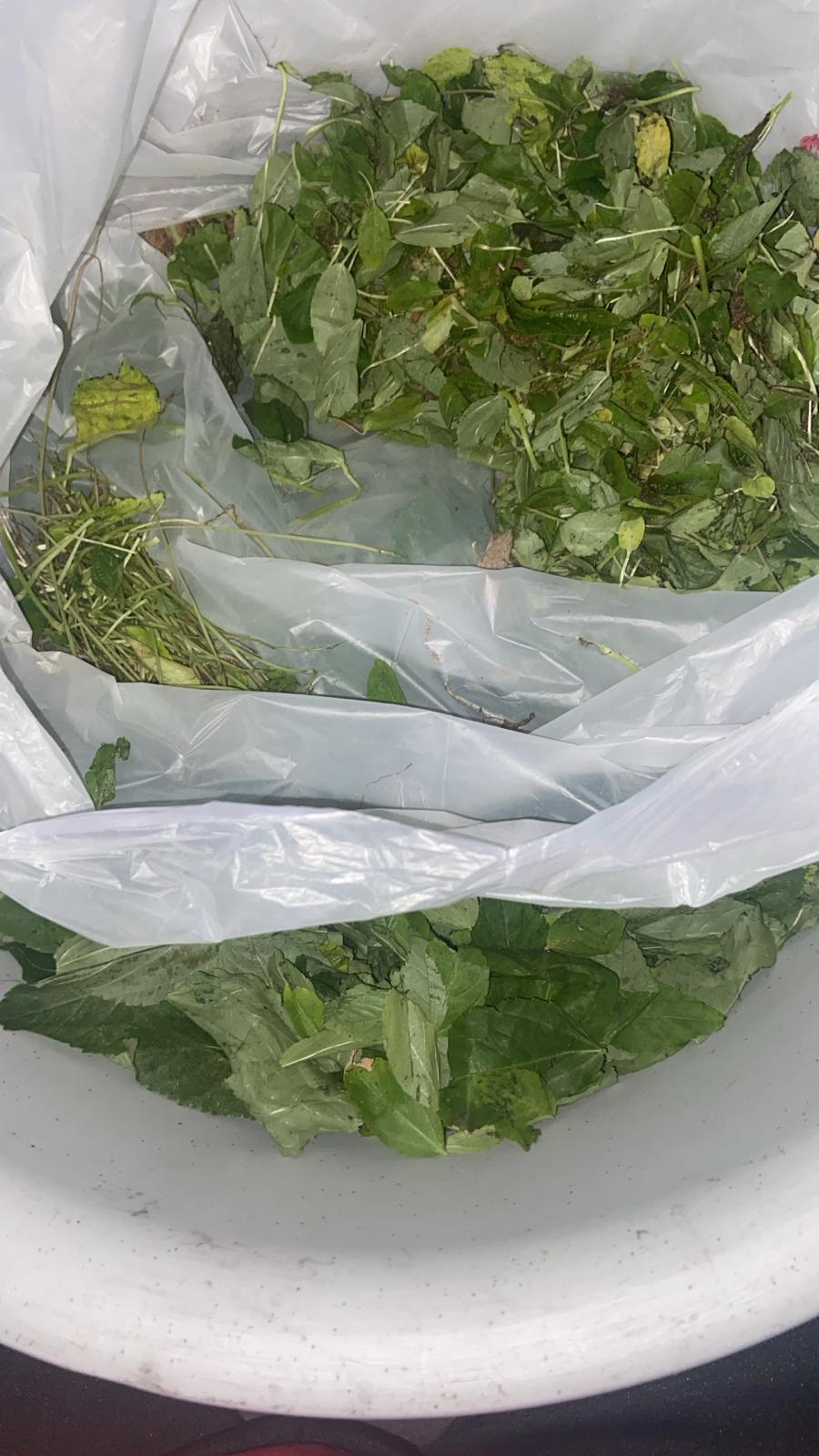
In Gaza’s Zaytoun area, freelance journalist Rawoand Altatar holds up a small plastic bag of molokhia leaves – her entire day’s food.
“When I heard Anas was killed, my heart ached. I’m very afraid,” she says. Her husband was injured in a crush at an aid truck, returning home empty-handed with a broken leg.
Pregnant and weighing just 45kg (about 99 lbs), she hides her press gear for fear of being targeted.
“People are afraid of me because every journalist is a target,” she says.
Yet she still reports, walking miles for an internet signal to send her work, until hunger stops her. “Sometimes I decline jobs because I can’t walk far. I feel dizzy.”
Camera for a sack of flour
In Al Sabra, NAWA agency journalist Amira Nassar survives on beans and lentils.
“I have no energy to continue,” she says. Reporting that once took days now drags into weeks. “Sometimes I can’t go out, and I interview by phone.”
Children around her are visibly starving.
“Nearly all children are malnourished. No milk, no supplements. Many have died,” she says. The fear of being killed never leaves. “The occupation kills journalists to hide the truth.”
Her desperation is stark: “We’ve reached the point of selling our cameras to get flour for our families.”
Instead of flour, fathers carry their dead
Since 2 March, Israel has closed all Gaza crossings, choking food and medical aid. Nearly 200 people, 96 of them children, have died of hunger, according to Gaza’s health ministry.
WHO warns 12,000 children under five are acutely malnourished, the highest monthly figure ever recorded. Aid drops spark chaos and death.
“People gather for food, and the occupation fires on them. Many are killed,” says Rawoand.
Doctors Without Borders has called for closing the deadly GHF aid hubs, where more than 1,300 Palestinians have been killed in stampedes and shootings while trying to reach sacks of flour.
“The scenes are apocalyptic,” Ibrahim says. “Hundreds scramble for scraps from airdropped aid among the rubble. Many don’t return – instead of flour, fathers carry home their sons’ bodies, shrouded in blood-stained white dust.”
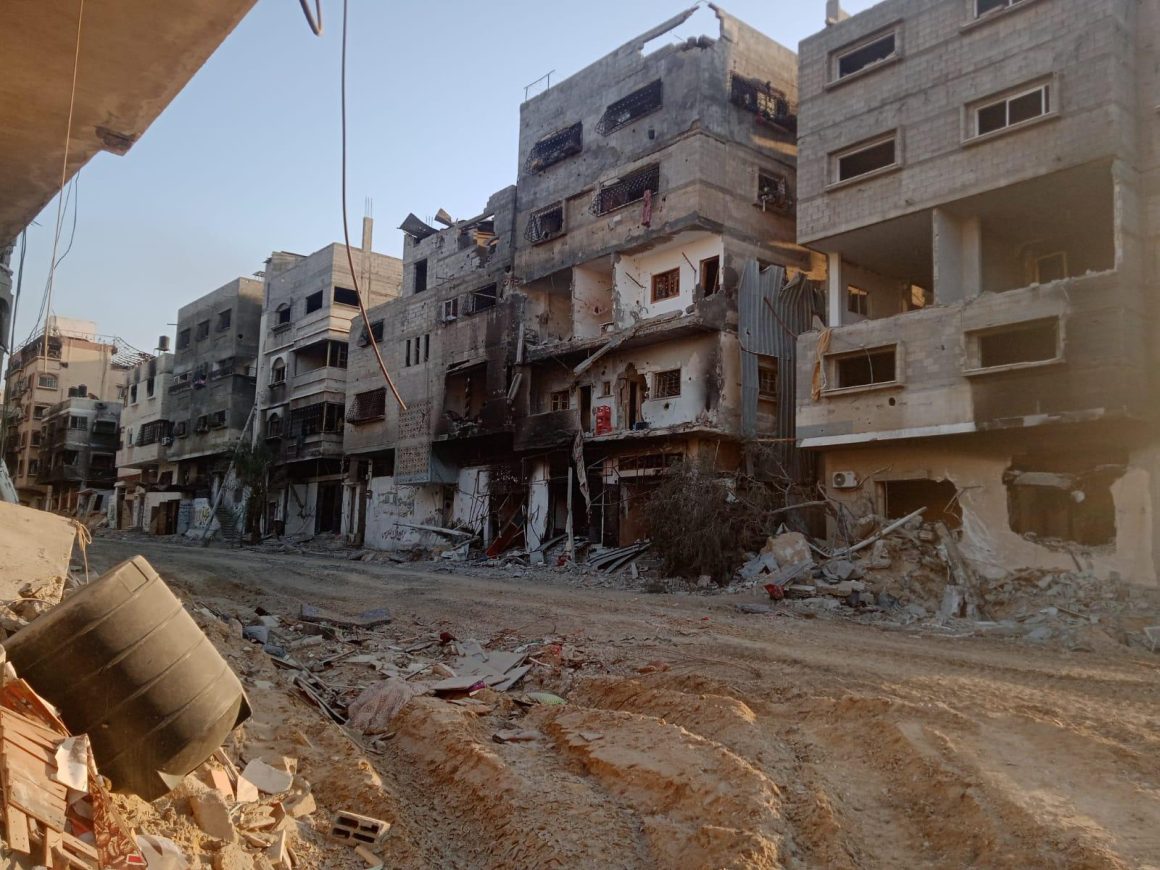
Thin, displaced, and starving, Gaza’s journalists – Ibrahim, Rawoand, Amira, and countless others – keep filming, writing, and sending their stories through fragile signals. They are the world’s last window into Israel’s relentless destruction of Gaza.
“I never hesitated to continue my work,” Rawoand says.
And in the haunting words Anas Al-Sharif sent to a friend before his killing: “I will not leave Gaza except to Paradise.”