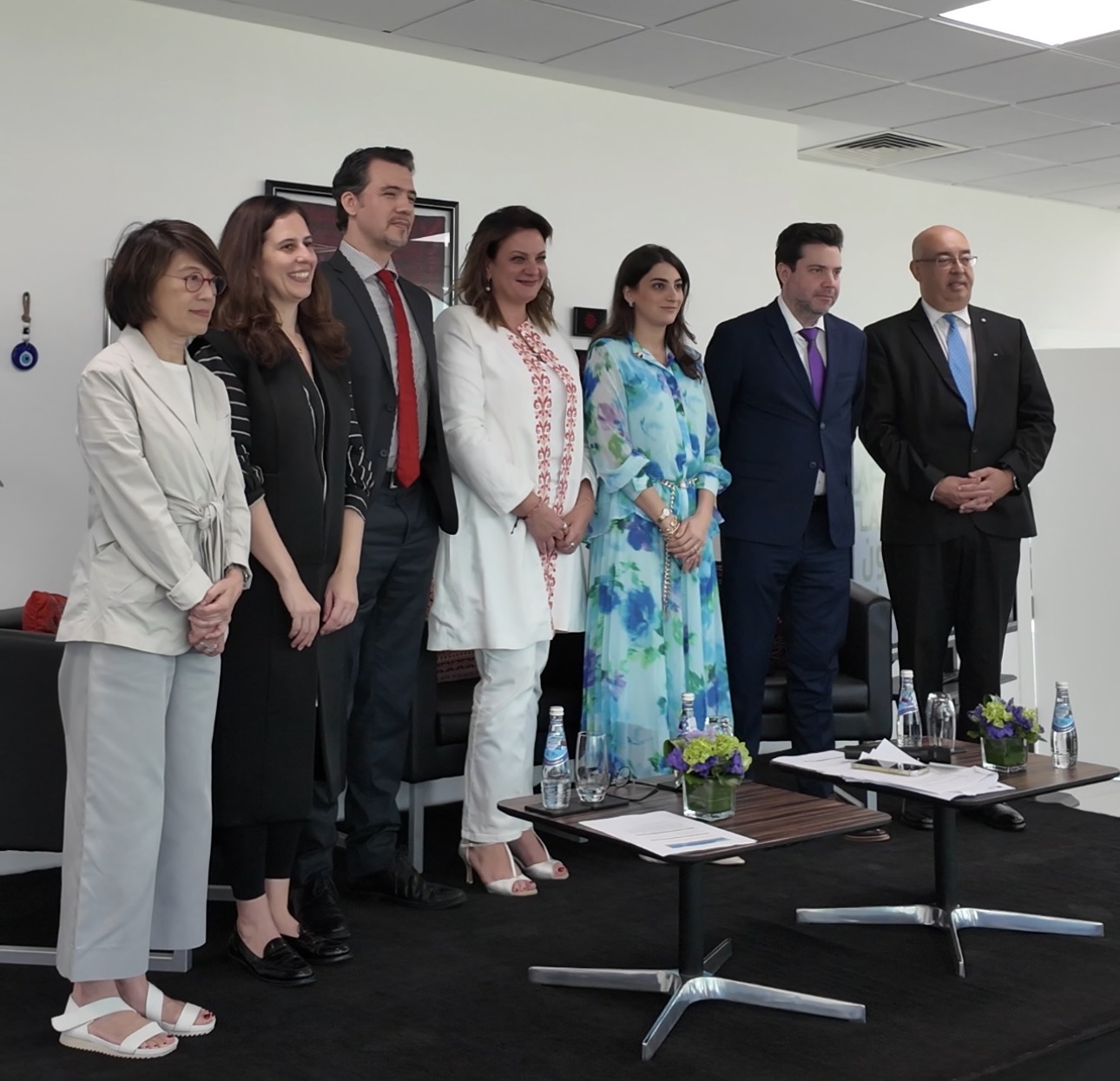
UNESCO’s Arab Latinos! Shared Roots, Shared Horizons event in Doha gathered diplomats, academics, and cultural leaders from over 32 embassies to celebrate Arab–Latin American ties through literature, archives, and cinema.
The United Nations Educational, Scientific and Cultural Organization (UNESCO) hosted “Arab Latinos! Shared Roots, Shared Horizons” at the UN House in Doha on Thursday, bringing together representatives from more than 32 embassies, academics, and cultural leaders to highlight the deep cultural and historical connections between the Arab world and Latin America and the Caribbean.
The event focused on strengthening South–South solidarity in the face of today’s global challenges. It also underlined the role of literature, archives, and cinema in creating space for inclusive storytelling, intercultural dialogue, and peacebuilding.
“Arab Latinos! is not only a celebration of this legacy, but also a strategic platform for South-South cooperation, echoing the spirit of the United Nations Day for South-South Cooperation,” said Salah Khaled, UNESCO representative to the Gulf States and Yemen, and director of the UNESCO Office in Doha.
“Through education, culture, the sciences, and communication, this initiative seeks to foster inclusive dialogue, collaborative knowledge production, and solidarity across regions of the Global South,” he added.
“We are proud to contribute to the Qatar–Argentina–Chile 2025 Year of Culture through this event, reinforcing the importance of cultural exchange in international relations.”
One roundtable focused on Al-Mahjar, the literary heritage of Arab migrants in Latin America.
Speakers included Refqa Abu-Remaileh, Associate Professor in Residence at Northwestern University in Qatar, and Huism Tan, Executive Director of Qatar National Library. Both stressed the importance of preserving Arab Latino archives, emphasising that their preservation, documentation, and accessibility require cooperation between governments, institutions, academia, and civil society.
Speaking to Doha News, Abu-Remaileh explained how she came to know about UNESCO’s Arab–Latino project through her own research initiative, Country of Words: A Transnational Atlas for Palestinian Literature. The project traces the global journey of Palestinian literature in the 20th century, from the Arab world to Europe, North America, and Latin America.
“The starting point for this project was supposed to be 1948, as most Palestinian literary histories and histories of Palestine begin at that point,” she said.
“To understand Palestine, we need to understand the outside of Palestine, and the outside of Palestine became the whole world, essentially, with the Mahjar being extremely important, and Chile in particular, in the particular case of Palestine,” Abu-Remailed added.
Another roundtable, “Cinema as a Bridge”, retraced the history of Arab Latinos cinema. Geraldo de Campos from the Department of International Relations at the Federal University of Sergipe in Brazil, and Christian Mouroux, Director of the LatinArab International Film Festival in Buenos Aires, showed how LatinArab co-productions create opportunities for collaborative storytelling that reflect diverse identities, enrich artistic expression, transcend borders, and challenge stereotypes.
Such partnerships, they argued, are a powerful medium for promoting intercultural dialogue and mutual understanding, advancing South–South cooperation in line with UNESCO’s mission.
The event concluded with participants emphasising the importance of concrete follow-up to sustain the Arab Latinos! initiative, from expanding access to archives, to fostering cultural exchanges, and reinforcing bilateral cooperation between national institutions.