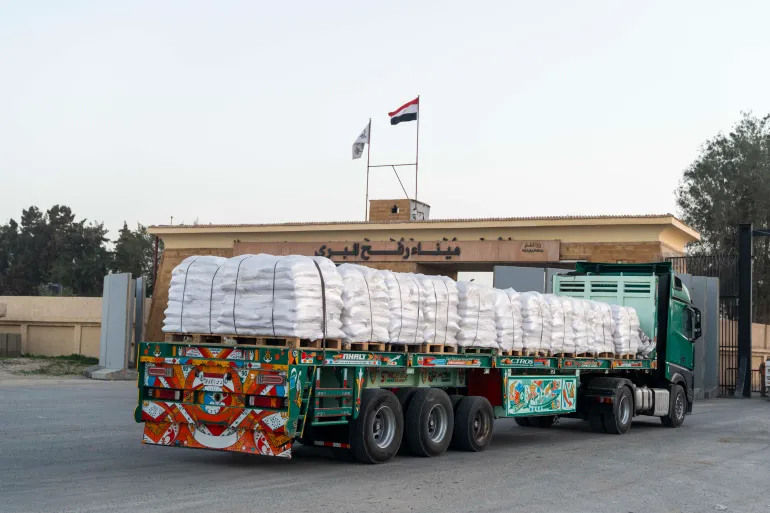
After years of closure and repeated delays and restriction from the Israeli Occupation, the Rafah border crossing between Gaza and Egypt has partially reopened, offering a critical lifeline for thousands of Palestinians awaiting medical evacuation.
The Rafah border crossing between the Gaza Strip and Egypt reopened on a limited trial basis on Sunday, marking the first step toward restoring regular movement of people in and out of the territory after more than a year of restrictions.
Palestinian and Israeli sources indicate that regular passage is expected to resume on Monday, following months of delays by Israeli authorities and mounting pressure from humanitarian organisations describing the situation in Gaza as catastrophic.
Under the ceasefire agreement signed in mid-October 2025, Israel occupation had committed to reopening the crossing, which serves as Gaza’s primary gateway to Egypt.
However, Israeli occupation forces, who have controlled the Palestinian side of Rafah since May 2024, repeatedly postponed the reopening.
Egyptian authorities reportedly insisted that the crossing must allow entry into Gaza as well as exit, rejecting Israeli proposals to operate it solely as an outbound checkpoint.
On Sunday, preparations and system checks were carried out, with the passage initially restricted to wounded individuals and patients awaiting medical evacuation.
According to Al Monitor, three sources at the crossing confirmed Egypt plans to admit all Palestinians authorised by Israel to leave Gaza, though the total number of travellers permitted in each direction has yet to be finalised.
COGAT, the Israeli body coordinating Palestinian civilian affairs, confirmed that the “Rafah Crossing was opened today for the limited passage of residents only” as part of a pilot operation conducted in coordination with Egypt and the European Union Border Assistance Mission.
Medical professionals in Gaza have hailed the reopening as a lifeline for patients who have long awaited evacuation. Mohammed Tahir, chief of surgery at the US-based NGO Fajr Global, told Al Jazeera that the measure will help “tens of thousands of injured people, who create a huge healthcare burden on the existing healthcare infrastructure in Gaza, which has already been depleted.”
He added that allowing only 150 patients per day to leave “does not even scratch the surface” of the urgent need, describing the arrangement as “just a token.” More than 1,000 patients reportedly died while waiting for evacuation between July and November 2025.
The reopening also paves the way for the entry of a 15-member Palestinian technocratic body, the National Committee for the Administration of Gaza (NCAG), established under the ceasefire to oversee the daily governance of Gaza’s 2.2 million residents.
Despite the reopening, ceasefire violations continue in Gaza. On Saturday, Israeli air strikes killed more than 30 Palestinians, even under the truce, highlighting the fragile nature of the ceasefire.
Khalil al-Hayya, a member of Hamas’s political bureau, condemned the attacks as “almost daily violations of the truce” and denounced them as “crimes and massacres” carried out under “false pretexts and lies.”
Qatar has also strongly condemned Israel’s repeated breaches of the ceasefire in the Gaza Strip. In a statement on Saturday, the Ministry of Foreign Affairs warned that the violations risk escalating tensions and undermining regional and international efforts to maintain calm and restore stability in the territory.
The United Nations has emphasised the importance of keeping Rafah open for humanitarian and commercial cargo to support Gaza’s economy, amid ongoing restrictions and operational delays that continue to affect aid delivery.