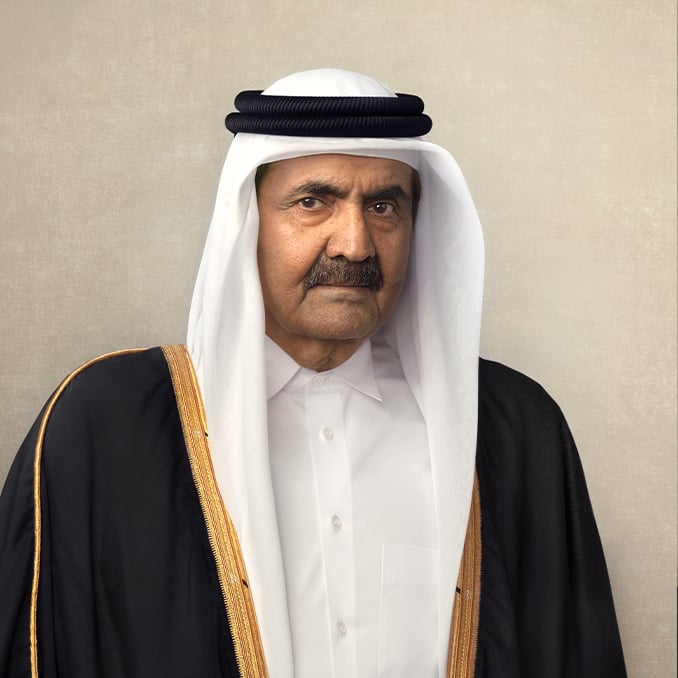
The Amiri Diwan has announced the death of Father Amir Sheikh Hamad bin Khalifa Al Thani, who passed away on Sunday morning, 12 July, at the age of 74.
Sheikh Hamad bin Khalifa Al Thani, the Father Amir of Qatar and the architect of the country’s modern transformation, passed away on Sunday, 12 July 2026, at the age of 74, the Amiri Diwan announced.
His demise marks the passing of one of the Middle East’s most influential leaders, whose 18-year reign transformed Qatar into a global diplomatic, economic and media powerhouse.
Born in Doha in January 1952, Sheikh Hamad completed his education in Qatar before attending the Royal Military Academy Sandhurst in the United Kingdom, graduating in 1971.
After graduating, Sheikh Hamad joined the Qatar Armed Forces. He was appointed Chief of Staff in 1972 and later became Commander-in-Chief of the armed forces with the rank of major general.
In 1977, he was appointed Heir Apparent and Minister of Defence by his father, the then-Amir Sheikh Khalifa bin Hamad Al Thani.
Over the following years, Sheikh Hamad assumed increasing responsibility for the country’s economic planning and governance, including serving as chairman of the Supreme Council for Planning from 1989.
On 27 June 1995, Sheikh Hamad assumed power and became the Amir of Qatar.
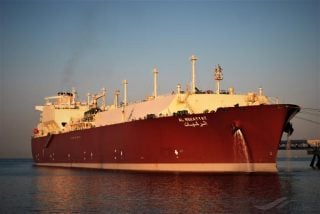
During his reign from 1995 to 2013, Qatar experienced extraordinary economic growth fuelled by the expansion of its natural gas industry.
The country’s gross domestic product increased more than twentyfold, while Qatar emerged as one of the world’s wealthiest nations on a per capita basis.
Sheikh Hamad also transformed Qatar’s international profile.
Under his leadership, Al Jazeera was launched in 1996, revolutionising Arabic-language broadcasting and establishing Qatar as a major media hub.
Domestically, he introduced gradual political reforms, including Qatar’s first municipal elections in 1999, in which women were granted both the right to vote and to stand as candidates.
His administration also oversaw the adoption of Qatar’s first permanent constitution, approved by referendum and promulgated in 2004, and launched Qatar National Vision 2030, the long-term blueprint for the country’s social and economic development.
Sheikh Hamad also deepened Qatar’s strategic partnership with the United States. During his reign, the country developed Al Udeid Air Base, which went on to become the largest U.S. military installation in the Middle East and the forward headquarters of U.S. Central Command.
Under his leadership, the country hosted major events including the 2006 Asian Games and the 2012 United Nations Climate Change Conference (COP18).
He also established the Qatar Investment Authority in 2005, the country’s sovereign wealth fund, which became a key pillar of Qatar’s economic strategy.
Through strategic investments worth more than $100 billion by the time he stepped down in 2013, the fund acquired stakes in major international companies and landmark assets, such as The Shard, Barclays Bank, Heathrow Airport, Harrods, Paris Saint-Germain F.C., and more.
One of the defining achievements of his rule came in December 2010, when Qatar won the right to host the 2022 FIFA World Cup, becoming the first Arab and Muslim nation to stage football’s biggest tournament.
The successful bid cemented Qatar’s emergence on the global stage and accelerated major investments in infrastructure and transport.
In a rare move in the Gulf, Sheikh Hamad voluntarily relinquished power on 25 June 2013, handing the reins to his son, Sheikh Tamim bin Hamad Al Thani, in what he described as a planned generational transition.
After stepping down, he assumed the title of Father Amir and remained a respected national figure, largely staying out of day-to-day governance.
Throughout his career, Sheikh Hamad received numerous international honours and was widely credited with laying the foundations of modern Qatar.
Admired by supporters as the visionary behind the country’s rise and regarded by critics as an assertive regional strategist, his legacy remains inseparable from Qatar’s emergence as one of the Gulf’s most influential states.