The United States and the Gulf Cooperation Council (GCC) have commended Qatar’s role in facilitating dialogue with Iran, recognising its contribution to diplomatic efforts aimed at achieving a lasting agreement and enhancing regional stability.
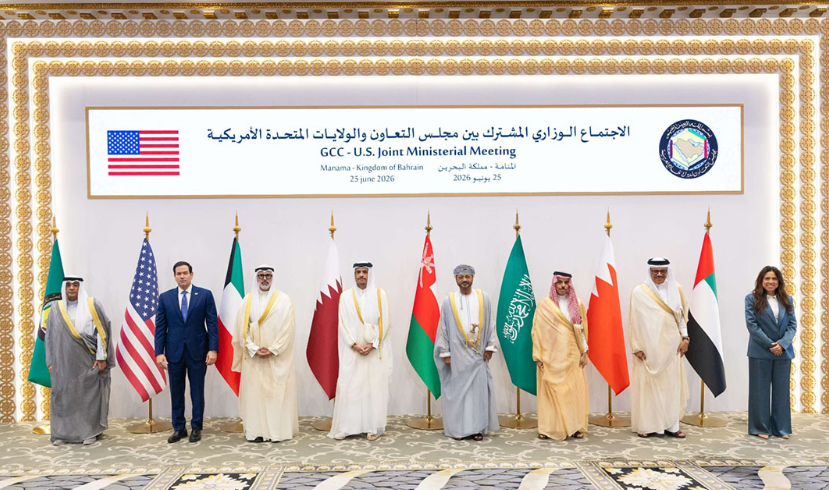
The United States and the Gulf Cooperation Council (GCC) reaffirmed their strategic partnership at a ministerial meeting in Manama on 25 June, co-chaired by U.S. Secretary of State Marco Rubio and Bahrain’s Foreign Minister Dr Abdullatif bin Rashid Al Zayani.
The meeting brought together the foreign ministers from GCC member states and GCC Secretary-General Jasem Albudaiwi.
In a joint statement, they welcomed the 17 June memorandum of understanding (MoU) between the United States and Iran, acknowledging “the important mediation roles played by Pakistan and Qatar”.
The ministers stressed the need to maintain momentum in negotiations aimed at preventing Iran from “ever developing or otherwise acquiring a nuclear weapon” while addressing “the full spectrum of Iran’s threats”, including its ballistic missiles, drones and support for proxy groups across the region.
They emphasised the strategic importance of the Strait of Hormuz, stating that “free, unconditional, and unrestricted navigation” remains essential to regional and global security.
The statement rejected any tolls, fees or attempts to assert control over the strategic waterway and welcomed Oman and the International Maritime Organization’s evacuation plan for more than 11,000 stranded seafarers.
Any future trade with Iran, they stated, would remain “conditional and reversible” based on Tehran’s compliance with the agreement and cessation of destabilising activities.
On regional issues, the ministers reaffirmed support for Syria’s sovereignty and pledged continued U.S. assistance to combat terrorism and facilitate refugee returns.
The ministers also reaffirmed their commitment to Lebanon’s sovereignty and stability, welcoming ongoing U.S.-facilitated negotiations between Israel and Lebanon aimed at securing a lasting peace agreement. They stressed that “full Lebanese sovereignty cannot be achieved while non-state armed groups maintain military capabilities outside the Lebanese state authority” and called for the full disarmament of such groups while strengthening the Lebanese Armed Forces.
Regarding Gaza, the ministers reiterated their support for President Donald Trump’s Comprehensive Plan to End the Gaza Conflict, endorsed by UN Security Council Resolution 2803.
They emphasised the need to demilitarise all non-state armed groups, transfer governance to an independent technocratic Palestinian civil committee, and reaffirmed that “no one will be forced to leave Gaza, and those who wish to leave will be free to return”.
The meeting concluded with the ministers condemning attacks by Iranian-backed groups in Iraq against GCC countries and reaffirming support for Iraq’s efforts to ensure weapons remain under state control.
The meeting concluded with condemnations of attacks by Iranian-backed groups in Iraq and reaffirmed support for Kuwait’s sovereignty.