Thirty-two teams, four venues, and one host city: Qatar is preparing for a historic first as basketball’s biggest tournament arrives in the Middle East.
Less than five years after football fans filled Lusail Stadium for the FIFA World Cup, another global tournament is preparing to leave its mark on Qatar — this time, inside basketball arenas.
“One city, 32 teams. The FIBA Basketball World Cup 2027 in Doha, Qatar, will be the ultimate hoops extravaganza,” FIBA says on their website.
Qatar will host the 2027 FIBA Basketball World Cup from 27 August to 12 September, becoming the first Arab nation to hold the tournament and only the third Asian host in consecutive editions.
Thirty-two national teams will compete across four venues, all located within roughly 30 minutes of one another — one of the most compact hosting models in the tournament’s history.
“Additionally, to have all 32 participating teams based in one city for the FIBA Basketball World Cup 2027 will present a unique opportunity for fans to customise their World Cup experience by accessing more games in person than in any other FIBA World Cup over the last twenty years. I believe 2027 will be a special experience in Doha for this flagship FIBA event,” said Andreas Zagklis, FIBA Secretary General.
Qatar secured the hosting rights following a unanimous vote by FIBA’s Central Board in Metro Manila in April 2023, with a bid built around accessibility, sustainability and existing infrastructure. Unlike previous editions spread across multiple cities or countries, every game in 2027 will take place in and around Doha.
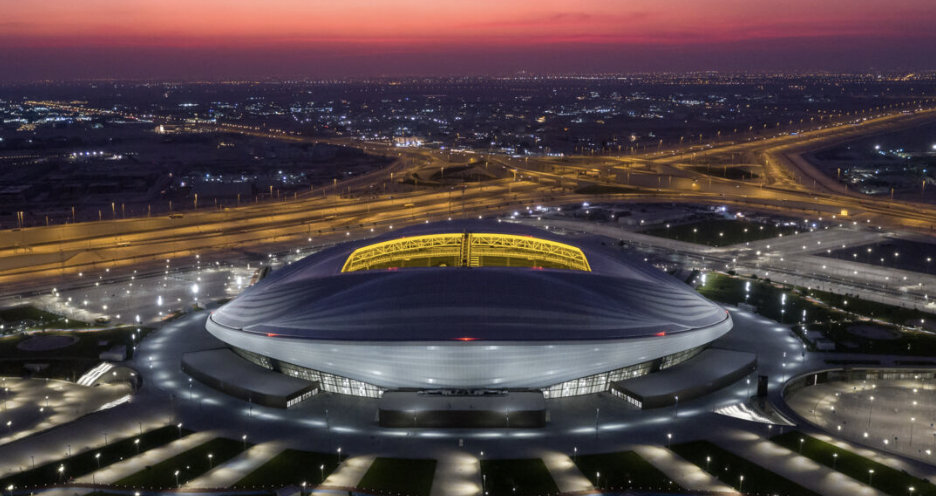
The tournament will centre on Lusail Arena, which holds more than 15,000 spectators and will host the semifinals and final. Al Attiyah Arena and Duhail Arena, both built for the 2015 Handball World Championship, will stage group-stage games, alongside Al Janoub Stadium — set to become the first FIFA World Cup stadium converted into a basketball arena.
Eighty national teams are currently competing for the remaining 31 places. As host nation, Qatar qualified automatically and will make its first appearance at the tournament since 2006. If Germany qualify through the 2027 European Championships, they will arrive in Doha as defending champions.
The 32 qualified teams will be divided into eight groups of four, with the top two from each group advancing to a second group stage before the knockout rounds — 92 games across 17 days in total.
For fans, Qatar’s compact model promises a different World Cup experience. Multiple games in a single day, one city, and the Doha Metro connecting it all.
The 2023 edition was co-hosted by the Philippines, Japan and Indonesia. Qatar’s single-city approach marks a shift in how the tournament can be organised — and another chapter in the country’s expanding portfolio of global sporting events, as it continues to build on the legacy of 2022 and prepares to host the 2030 Asian Games.