Walking into a midterm exam with a minor concussion in May was not on Ahmed Darwish’s 2025 bucket list.
One day before his mathematics exam, Darwish, 23, a chemical engineering student at Hamad Bin Khalifa University, spent the morning studying. At 7 p.m., he was at his usual evening training session — his way of clearing his head before big tests.
Like other student-athletes the writer of this feature interviewed, Darwish, a Mixed Martial Arts fighter, said sports always helped him focus.
That night, he warmed up with a 10-minute jog, moved through Muay Thai combination drills with a partner, and finished with a sparring session with a clubmate. In his last fight of the night, Darwish dropped his hands to the floor mid-fight.
“I just needed to catch my breath,” he said. “But next thing I know, I am seeing stars.” A clean head kick knocked him down.
He went back home, slept, and woke up dizzy and dazed. Still, he showed up to his exam the next morning without informing his professors that he might have been concussed.
“This happens more often than you think,” he said. He learned to manage head injuries on his own. “There is no need to go to the hospital for a minor concussion or tell the professors every time I get kicked in the head.”
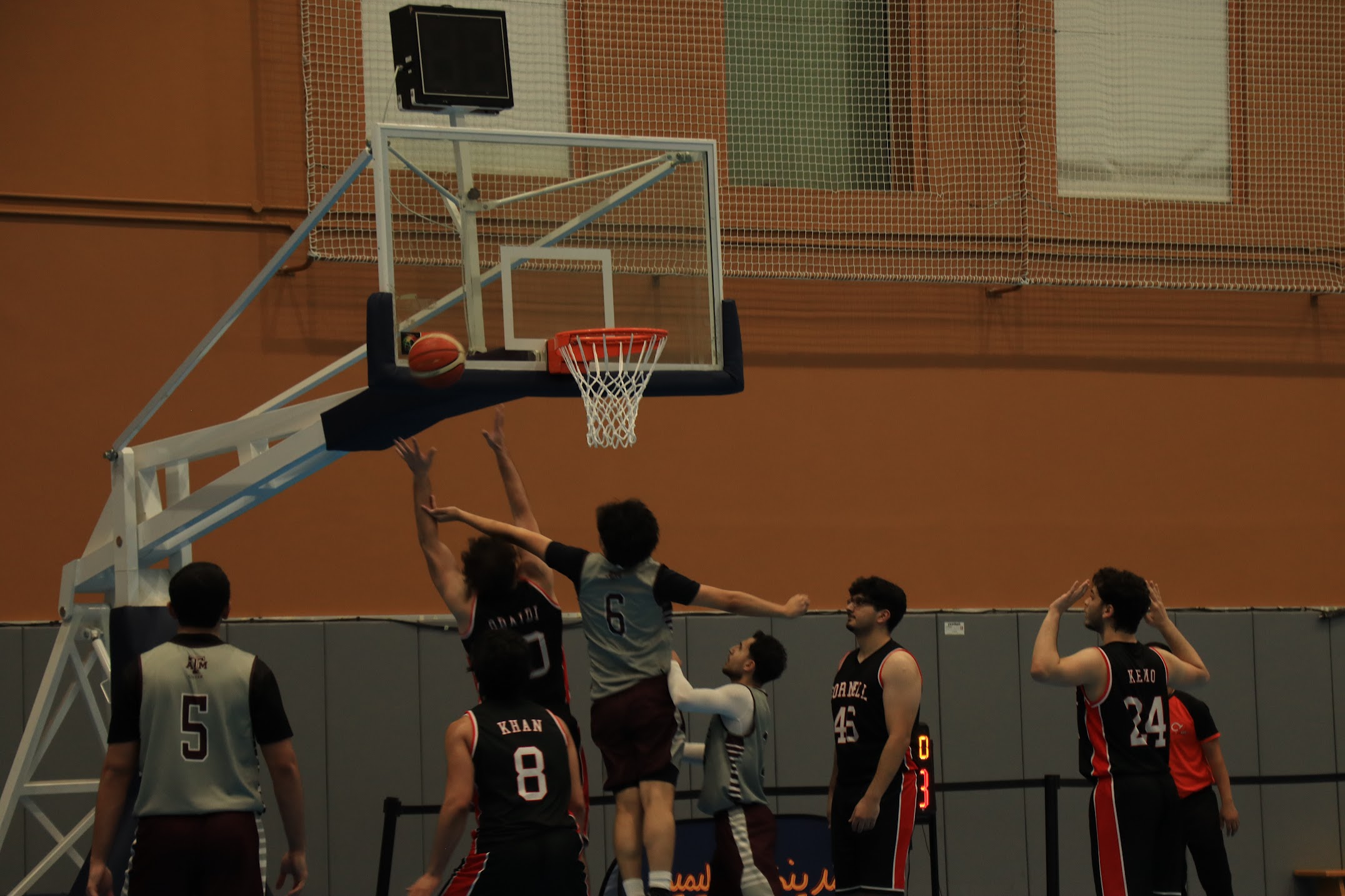
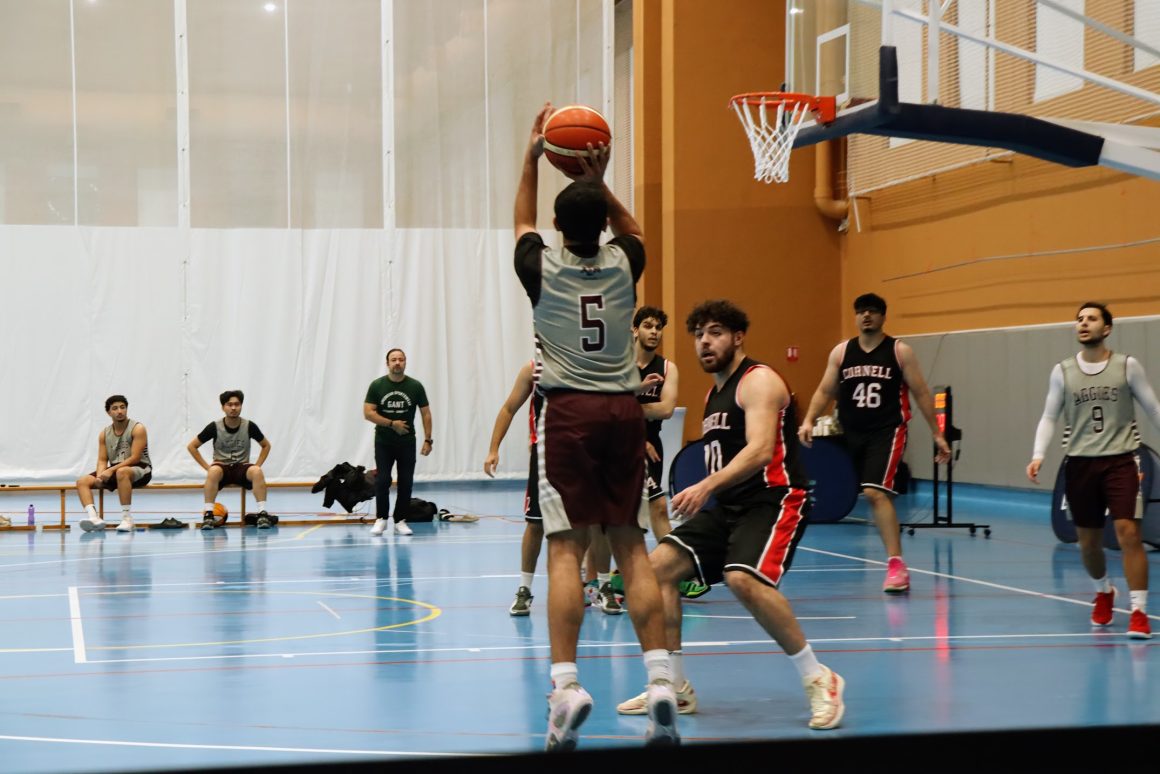
Across Qatar, student-athletes are juggling professional-level training, midterms, and competitions. While some universities offer support, four student-athletes who spoke with the writer said they often feel isolated or overlooked.
Sport psychologists who spoke to the writer warn that without a strong support system, student-athletes face heightened risks of physical and mental exhaustion, underperformance, or dropping out of either academics or sport. To keep up, many sacrifice social lives, adapt routines or temporarily step away from training.
To maintain strong performance at their respective sports, student-athletes typically train six times a week, according to multiple sports coaches and psychologists at Aspire Academy.
They also engage in supportive training like mobility, plyometrics, and weightlifting.
Despite the workload, the athletes who spoke with the writer expressed confidence in their ability to manage pressure.
Highly competitive and focused on success, several said they rarely seek help from sport psychologist.
Christopher Bradley, senior sport psychologist at Aspire Academy, said that societal pressure, which is magnified in elite sport, often pushes male athletes to do everything by themselves.
Bradley added that some male athletes may double down on training, gym, nutrition and sleep to avoid having those conversations.
“If you’re already struggling to fit in training, recovery and doing your assignments, having an hour with a psychologist probably feels like someone you don’t have time for,” Bradley said.
In some cases, student-athletes are much less likely to seek psychological support if it’s not integrated in their training environment.
Bradley warned that neglecting health may contribute to long-term stress or burnout, which can manifest as underperformance, illness, injury, or even an athlete’s ability to compete.
“It’s hard enough for men and male athletes to be willing to be vulnerable in the first place,” Bradley said. “The first part of resilience is actually being willing and able to reach out and access support. The hardest thing to do is ask for help.”
In March 2025, Qatar’s Ministry of Sports and Youth launched a national strategy aiming to strengthen the role of community sports and highlight their importance in improving physical and mental health.
For competitive swimmer and Texas A&M University Qatar mechanical engineering student Hamza Elhelw, 20, the pressure has been constant. His goal is to participate in the Olympics, even after neglecting a shoulder injury sustained from overtraining in 2021.
By fall 2023, he had cut his swimming sessions from fiver per week to two.
But his performance in both swimming and academics continued to decline. He eventually decided to take a break from swimming.
After a year of recovery, he returned to his five weekly swim sessions and three gym sessions. He was doing well in his engineering courses, research and even worked on a Shell Eco-Marathon project. To cope, he shifted all his meetings and classes to the afternoon, leaving mornings for training and revision, hoping to catch up.
Sports psychologists at Aspire Academy agree that there is a greater emphasis for athletes to excel academically. During exam periods, they can typically see athletic performance and training attendance drop.
In Education City, student-athletes from Carnegie Mellon Qatar, Texas A&M Qatar and HBKU said they sometimes struggle to communicate with professors about absences and deadlines during competition season.
Some faculty and staff urge students to prioritise academics, while others encourage athletic pursuits and follow student progress in that area closely.
Ryan McLawhon, assistant dean for academic services and student affairs at Texas A&M University at Qatar, said that Education City does not offer the same level of support or scholarships for student-athletes as the university’s U.S. campus, largely because few pursue sports professionally.
“We’re able to accommodate those students because we don’t have a large number of them. One every other year sometimes that we can make special arrangements for them to miss class,” McLawhon said.
Universities in Education City offer writing centres, tutoring, and onsite psychological counseling, but student-athletes must take the initiative to seek help.
“Our students don’t come to Texas A&M Qatar, Northwestern or VCU, or any of these schools to pursue athletics, they’re coming to primarily pursue the degree,” he added. “For most of them, athletics is a hobby or something that they’re pursuing as a lower priority.”
Still, McLawhon said faculty and administration understand the demands that student-athletes have and try to accommodate them.
Meanwhile, students at local universities, including the University of Derby, Qatar University and University of Doha for Science and Technology, said they found it easier to manage their studies, thanks to one-on-one support, rescheduled exam dates and occasional test cancellations.
According to sports psychologist Bradley, tensions between student-athletes and professors often stem from simple miscommunication.
Bradley said professors may be trying to hold students accountable while being flexible with deadlines, but athletes may interpret this as a lack of support for their sporting commitments.
The coaches and sport psychologists the writer interviewed said success in both sport and academics depends not only on talent and discipline but also on communication, time management, and willingness to seek support.
Athletes who combine these strategies report feeling better equipped to manage the demands of a dual career.
Hamza Souissi, a professional shot put athlete and a 2025 University of Derby graduate, is one example.
He earned an international business degree while competing on the Qatar national team and winning gold at the 2021 Amir National Cup.
“There is no such thing as burnout if you’re really doing something which you like. I really liked studying and learning something new, as well as training and making sure my [level] is maintained,” Souissi said. “As soon as I finished university, everything paid off.”
Pako Elseehy is a student journalist at Northwestern University Qatar whose reporting focuses on sports, human-interest stories, and visual storytelling through photography.