Despite the constraints, collective actions against Israel urged by the emergency Arab-Islamic Summit on Monday could move the needle, according to experts.
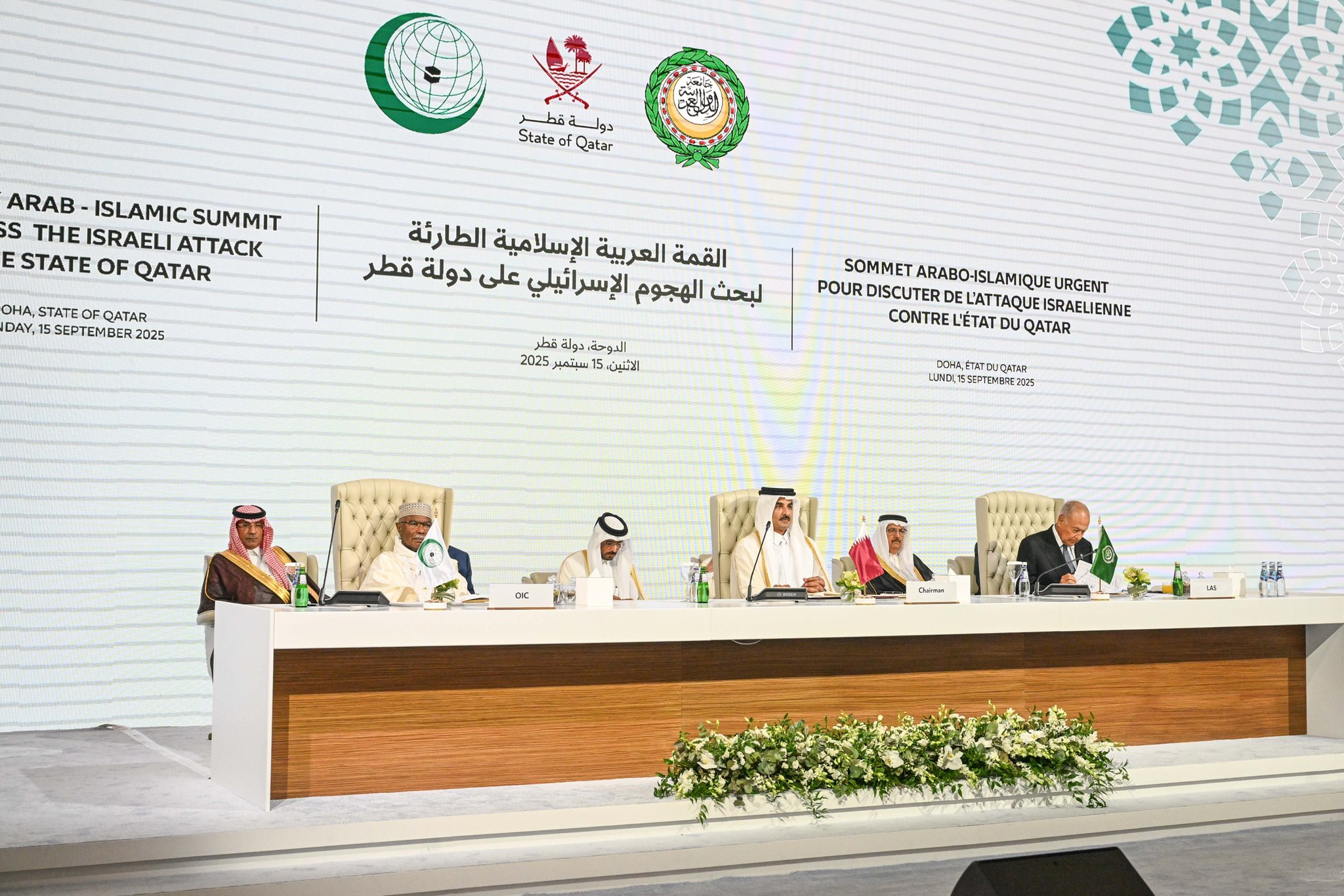
As leaders and representatives of 57 Arab and Islamic countries descended in Doha for an emergency summit convened against Israel’s attack in Qatar targeting the Hamas delegation, much interest was on what would be the outcome of the high-profile meeting.
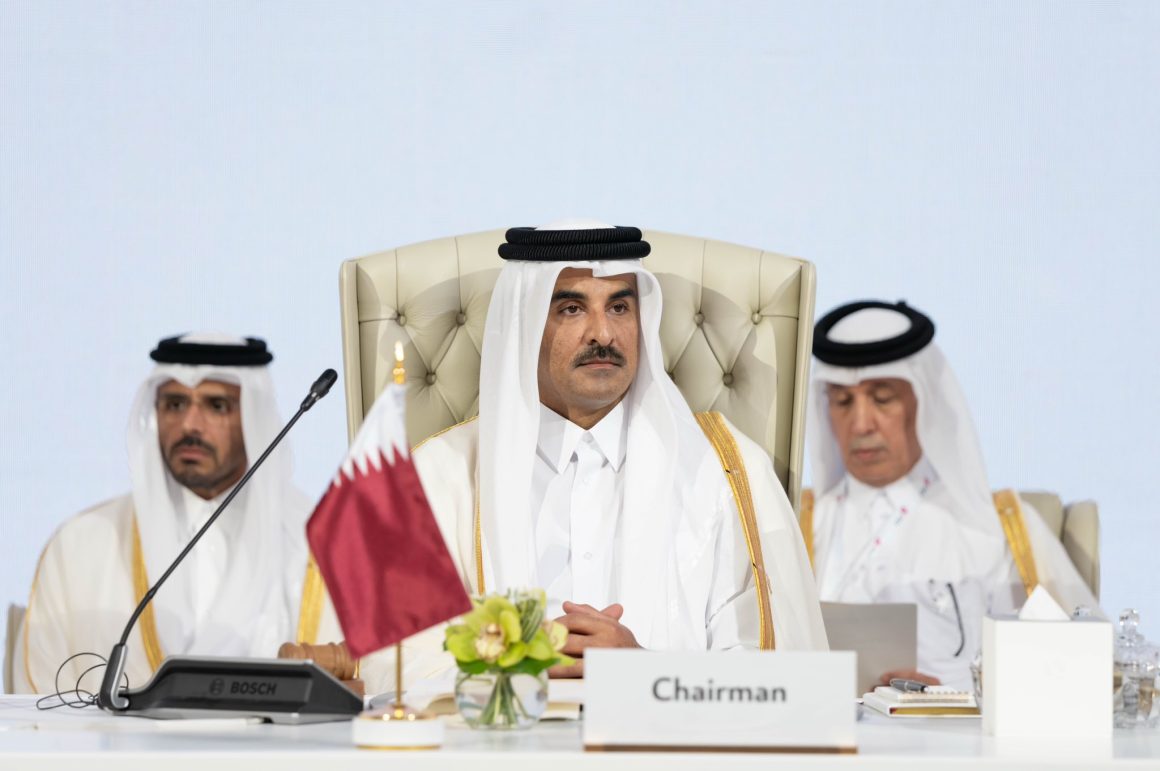
It started with a rather pointed speech from Qatar’s Amir Sheikh Tamim bin Hamad Al Thani, who called on the summit to take concrete steps against the “blatant, shameless, and cowardly” attack by Israel.
The gathering had brought together leaders to discuss Israel’s unprecedented attack on the Qatari capital, which targeted a residential building housing members of Hamas’s political office, killing five Hamas members and 22-year-old Corporal Bader Al-Humaidi Al-Dosari, a member of Qatar’s Internal Security Force (Lekhwiya).
Additionally, the Amir’s opening address called out Israel’s genocide in Gaza, Israeli Prime Minister Benjamin Netanyahu’s tactics of sabotaging negotiations and the reckless actions to undermine regional security.
The speech highlighted the gravity of the moment in front of representatives of more 57 nations, according to the Middle East Council on Global Affairs’ Director and Senior Fellow Adel Abdel Ghafar.
“The speech did not sugarcoat any of the issues and described them directly,” Abdel Ghaffar told Doha News.
“It was diplomatic, but at the same time very direct, and it was a call for collective action, not just against the attack on Qatar, but the bigger, wider issue that we’re having is this ongoing genocide in Gaza.”
A few hours later, the summit concluded after adopting a resolution drafted by the preparatory meeting on Sunday, drafted mainly by foreign ministers of the participating countries, calling for measures beyond verbal condemnations.
Will calls for legal and political measures come to fruition?
In addition to terming Israel’s attack on Qatar as “cowardly, illegal and treacherous”, the final statement adopted by the emergency summit urged the participating countries to take “effective legal and political measures” to deter Israeli actions.
Those measures could include sanctions, suspension of supply, transfer or transit of weapons and dual-use items. It also called on all states to review diplomatic and economic relations, as well as initiate legal proceedings against Israel.
It came after various leaders called for actions during the summit, with Turkish President Recep Tayyip Erdogan calling for “severe sanctions” against the “greedy, bloodthirsty mentality” of the Netanyahu government.
Echoing Erdogan, Malaysia’s Prime Minister Anwar Ibrahim asked for a cessation of diplomatic engagements with Israel.
“Condemnations will not stop the missiles and declarations will not free Palestine,” Ibrahim said, urging “severe, punitive actions”.
It is, however, easier said than done, according to Abdel Ghafar.
“It is very difficult to coordinate specific responses with such a big group of countries from the Muslim and Arab world because the OIC and the Arab League also suffer from their own issues,” he said.
What were Qatar’s goals in organising the summit?
In addition to a strong collective condemnation, Qatar’s likely goal from the summit entailed drawing red lines against Israeli actions, according to Gulf security expert and King’s College London academic Dr. Andreas Krieg.
“The fact that so many delegations have shown up in Qatar at such short notice shows how grave Israel’s aggression against Qatar has been viewed across the Gulf and the Islamic world,” Krieg told Doha News on Monday.
Qatar also sought to take meaningful steps towards establishing a “regional deterrence umbrella”, he added, which was later reflected in the GCC’s pledge to “activate a joint defence mechanism”, announced after the summit.
It was the most solid outcome of the summit for Abdel Ghafar. “The GCC that are most alarmed given that the attack happened for the first time here in the Gulf and may not be the last time that Israel attacks the region here,” he added.
On the flip side, the summit was also about sending a message to the U.S., which has acted as the region’s security guarantor, said Palestinian National Initiative President Mustafa Barghouti,
“The summit can restrain him [Netanyahu] if they take serious measures […] and send a message to the U.S. that an attack on an Arab or Muslim country is an attack on all and that its interest would be affected negatively if Israel is allowed to continue these aggressions,” he added.
Qatar’s future as a mediator ‘unaffected’
Doubts regarding Qatar’s future as a mediator had started following Israel’s bombing in Doha on September 9, an event described by Syrian President Ahmed Al-Sharaa as unprecedented.
“It is one of the rare occurrences in history that a negotiator is killed, and it is a rare precedent for the mediator to be targeted,” Al-Sharaa said.
However, speaking to Doha News on the sidelines of the summit, Middle East Council on Global Affairs’ non-resident fellow Rashid Al-Mohanadi said it is unlikely to deter the nation’s mediation efforts.
“We’re one of the few states that mentions mediation as a foreign policy tool within our constitution,” Al-Mohannadi said. “It might change how we approach the mediation when it comes to anything involving Israel. But it shouldn’t affect the overall efforts.”
The summit, retrospectively, was a success for Qatar as a mediating state, according to Abdel Ghafar, the Council’s Foreign Policy Program Director.
“It was important for leaders to come to Doha at such short notice and show the solidarity against the aggression that has happened,” he said.
“Israel is increasingly operating as a rogue state, an unhinged rogue state. It is very difficult to put sort of limits on that because only really the US can fully alter Israeli behaviour. But what the collective action can do is increase the international isolation of Israel.”